
Aug 12, 2026News & Insights
How to Choose the Right Pipeline Valve | Selection Guide
Learn how to choose the right pipeline valve based on fluid, pressure, temperature, pipe size, material and application. Compare gate, butterfly, ball, check and globe valves.
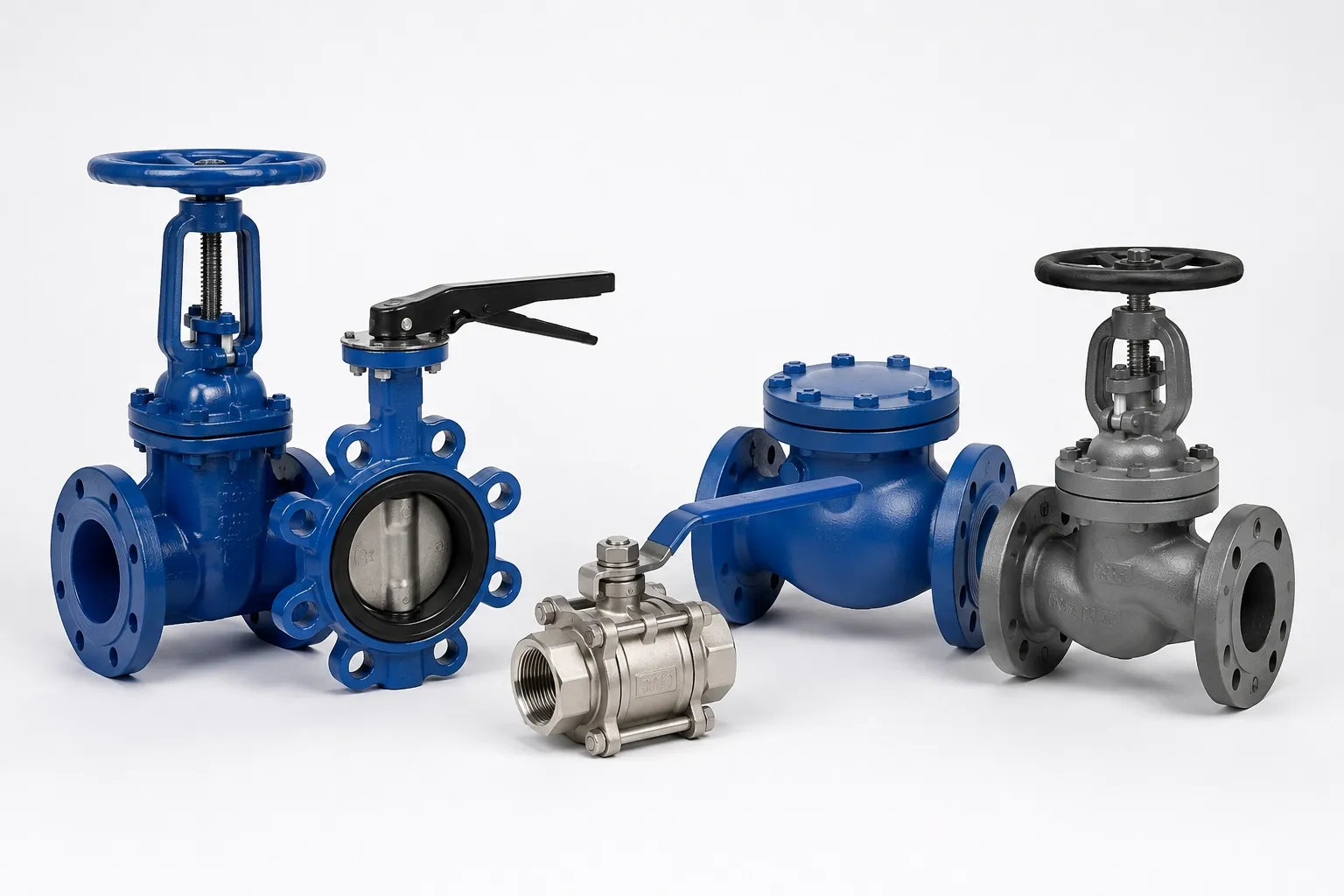
How to Choose the Right Pipeline Valve: A Practical Selection Guide
Choosing the right valve is important for the safety, efficiency, and service life of a piping system. Gate valves, butterfly valves, ball valves, check valves, and globe valves are designed for different operating conditions, so the best choice depends on more than just pipe size.
When selecting a pipeline valve, start with the fluid or media, working pressure, temperature, pipe diameter, connection type, and required valve function.
This guide explains the key factors to consider and helps you compare common valve types for water supply, industrial piping, irrigation, and other pipeline applications.
1. Consider the Fluid or Media
The first step is to identify what will flow through the pipeline.
For clean water systems, many standard valve materials may be suitable. For wastewater, chemicals, corrosive fluids, or other industrial media, the valve body, seat, seals, and internal components must be compatible with the fluid.
Consider:
- Water or wastewater
- Chemicals
- Corrosive media
- Oil or industrial fluids
- Fluid containing suspended solids
Material compatibility is especially important because an unsuitable material may cause corrosion, seal damage, leakage, or reduced valve life.
2. Check the Working Pressure
Every valve has a specified pressure rating. The selected valve should meet the operating pressure and design requirements of the pipeline system.
Before purchasing, confirm both the normal working pressure and possible pressure fluctuations.
Common pressure requirements vary according to valve type, material, size, and applicable standard. Always check the manufacturer's technical data instead of selecting a valve based only on nominal pipe diameter.
3. Consider Operating Temperature
Temperature can affect valve body materials, seals, seats, and overall service life.
For normal water supply systems, standard valve configurations may be sufficient. Higher-temperature or special industrial applications may require different materials and sealing solutions.
Always provide the expected operating temperature when requesting a valve quotation for a specific project.
4. Determine the Required Valve Function
Different valves perform different jobs.
Ask what the valve needs to do:
Isolation
Used when the main purpose is to completely open or close the pipeline.
Flow Regulation
Used when the system requires adjustment or control of flow.
Backflow Prevention
Used to prevent fluid from flowing in the reverse direction.
Quick Shut-Off
Used when fast opening and closing are required.
Understanding the function helps narrow down the appropriate valve type.
5. Select the Right Valve Type
Valve Type | Main Function | Typical Applications | Main Advantage |
|---|---|---|---|
Gate Valve | Isolation | Water supply and distribution pipelines | Low flow resistance when fully open |
Butterfly Valve | Isolation / Flow Control | Large-diameter water and industrial pipelines | Compact design and lower installation weight |
Ball Valve | Quick Shut-Off | Water and industrial piping systems | Fast operation and reliable sealing |
Check Valve | Backflow Prevention | Pump outlets and water systems | Automatic operation |
Globe Valve | Flow Regulation | Industrial and process pipelines | Good flow regulation capability |
There is no single valve type that is best for every pipeline. The correct choice depends on the operating conditions and required function.
6. Consider Pipe Diameter
Pipe diameter affects valve size, cost, installation space, operating method, and valve type.
For larger-diameter water pipelines, butterfly valves are commonly considered because of their compact structure and relatively low weight.
Ball valves are often selected where quick shut-off and tight sealing are required, while gate valves remain widely used for isolation in many water supply systems.
The final selection should be based on both pipeline diameter and actual operating conditions.
7. Choose the Connection Type
The valve connection must match the pipeline and installation requirements.
Common options include:
Flanged Connection
Widely used in water supply and industrial pipeline systems and convenient for maintenance and replacement.
Threaded Connection
Commonly used for smaller pipe sizes and relatively simple installations.
Wafer Connection
Frequently used with butterfly valves and installed between two pipeline flanges.
Grooved Connection
Used in certain water supply and fire protection piping systems.
Confirm the required connection standard and dimensions before ordering.
8. Match the Valve Material to the Pipeline System
Common valve body materials include:
- Cast iron
- Ductile iron
- Carbon steel
- Stainless steel
- PVC and other engineering plastics
The correct material depends on the fluid, pressure, temperature, environment, and project requirements.
For corrosive environments, material compatibility should be checked carefully before valve selection.
Which Valve Should You Choose?
For a typical pipeline project, the following can be used as a starting point:
Requirement | Valve to Consider |
General pipeline isolation | Gate Valve |
Large-diameter water pipeline | Butterfly Valve |
Fast opening and closing | Ball Valve |
Prevent reverse flow | Check Valve |
Precise flow regulation | Globe Valve |
Compact installation | Butterfly Valve |
Tight shut-off | Ball Valve |
These are general selection guidelines. Actual valve selection should always consider the complete operating conditions of the pipeline.
Common Valve Selection Mistakes
Choosing Only by Pipe Size
Two pipelines with the same diameter may have completely different pressure, temperature, media, and operating requirements.
Ignoring the Valve Function
A valve designed primarily for isolation may not be the best choice for frequent flow regulation.
Ignoring Material Compatibility
The fluid can affect valve bodies, seats, seals, and internal components. Material selection should therefore be based on the actual medium.
Not Confirming Connection Standards
Flange dimensions, pressure ratings, and connection standards should be confirmed before production or purchase to avoid installation problems.
Information to Provide When Requesting a Valve Quotation
Providing complete project information helps the supplier recommend a more suitable valve.
For a faster quotation, prepare:
- Valve type
- Nominal diameter (DN)
- Working pressure or pressure rating
- Fluid / media
- Operating temperature
- Body material
- Connection type
- Required standard
- Manual or actuated operation
- Quantity
- Destination country
If you are unsure about the exact valve specification, provide the pipeline application and operating conditions first.
FAQ
How do I choose the right valve for a pipeline?
Start by identifying the fluid, working pressure, temperature, pipe diameter, required valve function, connection type, and material requirements. Then compare suitable valve types based on these conditions.
Which valve is best for shutting off a pipeline?
Gate valves, butterfly valves, and ball valves can all be used for isolation. The best option depends on pipe size, pressure, operating frequency, installation space, and sealing requirements.
When should I use a ball valve?
Ball valves are commonly selected when fast operation and tight shut-off are important. They are widely used in water and industrial piping systems.
What valve prevents water from flowing backward?
A check valve is designed to prevent reverse flow and is commonly installed in pump and water supply systems.
Which valve is suitable for large-diameter water pipelines?
Butterfly valves are commonly considered for large-diameter water pipelines because of their compact structure, relatively low weight, and convenient operation.
Need Help Selecting a Pipeline Valve?
Valve selection should be based on the actual pipeline conditions rather than one specification alone.
Send us your pipe size, working pressure, fluid, temperature, connection type, required standard, and quantity, and we can help identify suitable valve options for your project.