
Aug 12, 2026Success Stories
One-Stop Irrigation & Water Pipeline Supply | Africa Project Case
One-stop irrigation solutions tailored to your nee ds . Tired of mismatched parts and leaky systems? Our one-stop irrigation solutions solve your biggest pain points.
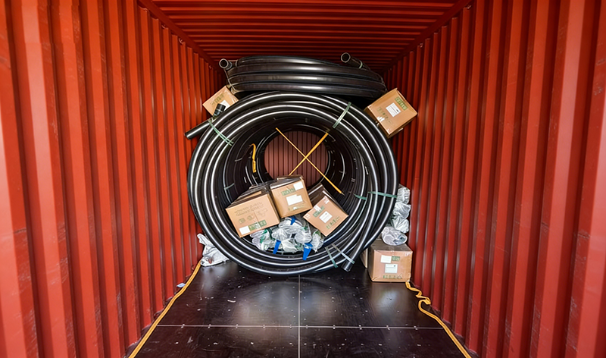
One-Stop Pipeline Supply for Water & Irrigation Projects: A 6-Year Africa Project Case
For many water supply and irrigation projects, purchasing the main pipes is not the most difficult part.
The real challenge comes when one project requires dozens of different pipeline products, multiple materials, different connection methods, different standards, and many small quantities.
This is exactly the situation we have been handling for one of our long-term customers in Africa.
We have worked with this customer for more than six years, supplying pipeline products for water supply, drainage, and irrigation projects. Their orders are very different from a typical container order of one or two products.
A single project may contain steel fittings, flanges, ductile iron fittings, cast iron valves, galvanized steel pipes, PVC products, PE compression fittings, sensors, wire ropes, and other project accessories.
Some items may only require a few pieces.
The difficulty is not simply supplying them.
The real job is making sure all these different products can work together as one pipeline system.
The Challenge: Many Products, Small Quantities, One Project
International water and irrigation projects often require products from several completely different manufacturing categories.
For this African customer, a typical purchasing list may include:
- Ductile iron pipe fittings
- Galvanized steel pipes
- Sensors and measuring components
- Wire ropes
- Pipeline accessories
- Other project-specific components
The quantity of each item may be relatively small, but the total number of specifications can be very large.
For a project buyer, purchasing these products separately from many factories creates another problem:
Who checks whether everything actually matches?
A flange may come from one factory, a valve from another, a PE adaptor from another, and a ductile iron fitting from another.
Each individual product may be correct.
But if the diameter, flange drilling, thread, pressure rating, connection type or standard does not match, the complete system may still fail during installation.
That is why this customer does not use us simply as a supplier of one particular product.
We help them coordinate the complete pipeline product list.
More Than Supplying Products — Matching the Complete System
After approximately 15 years of working with pipeline products, one of our key strengths is understanding how different pipeline components connect to each other.
When we receive a project purchasing list, we do not only check the product names and quantities.
We also look at the relationship between the products.
For example:
Will this valve connect correctly to this flange?
Does the flange drilling match the required standard?
Does the PE adaptor match the outside diameter of the PE pipe?
Does the PVC fitting correspond to the specified pipe size and standard?
Does the threaded fitting require BSP, BSPT or NPT?
Are DN and inch sizes being interpreted correctly?
Does the pressure rating match the rest of the system?
These details are especially important when a project combines products from different pipeline systems.
Products We Supply for the Project
1. Steel Pipe Fittings
Steel fittings are used in different sections of the customer's water and irrigation systems.
Depending on the project, the requirement may include elbows, tees, reducers and other fabricated or standard steel fittings.
Dimensions, wall thickness, connection requirements and flange compatibility must be checked according to the project specifications.
2. Flanges
Flanges look simple, but they are one of the easiest components to order incorrectly.
We check important details such as:
- Nominal diameter
- Pressure rating
- Flange standard
- Bolt-hole quantity
- Bolt circle
- Connection dimensions
- Matching valve or fitting
This becomes particularly important when one project combines products manufactured according to different standards.
3. Ductile Iron Fittings
Ductile iron fittings are widely used in water supply and irrigation infrastructure.
The customer's projects may require different elbows, tees, reducers, adaptors and other fittings.
Rather than treating each item independently, we check how these components connect with the pipes, valves and flanges used in the same project.
4. Cast Iron Valves
Different sections of a water system may require different valve types and sizes.
The project may include isolation and flow-control products such as gate valves, butterfly valves, check valves and other cast iron or ductile iron valves according to the application.
For valve supply, we pay particular attention to:
- Size
- Pressure rating
- Flange standard
- Face-to-face dimensions where required
- Operation method
- Connection compatibility
5. Galvanized Steel Pipe
Galvanized steel pipe is also included in some project purchasing lists.
When supplied together with threaded fittings, flanges or other components, pipe dimensions and connection requirements must be checked as part of the complete system rather than as an isolated product.
6. PVC Pipeline Products
PVC products are used in various water and irrigation applications.
Depending on the project, we help coordinate the required pipes, fittings and connecting accessories according to size, pressure and application requirements.
7. PE Compression & Quick-Connect Fittings
PE pipeline systems often require many small fittings.
An irrigation project may need different sizes of:
- Compression couplings
- Elbows
- Tees
- Reducers
- Male adaptors
- Female adaptors
- Flanged adaptors
- Other quick-connect products
Individual quantities can be small, while the number of specifications can be large.
This is exactly where consolidated purchasing becomes useful.
8. Sensors and Project Accessories
Not everything on a pipeline project purchasing list is a pipe or fitting.
The customer also requires sensors and other project-specific components.
When possible, these products are coordinated together with the main pipeline order, reducing the number of separate suppliers the customer needs to manage.
9. Wire Rope and Other Supporting Products
Some projects also require products outside the traditional pipe-and-fitting category, including wire rope and installation accessories.
Because the customer's objective is to complete the project rather than purchase a single product category, we help source and consolidate suitable supporting products when required.
Why One-Stop Purchasing Works for This Customer
The customer could purchase every product directly from a different factory.
But imagine one project requiring products from 10 or 15 different suppliers.
The buyer would need to manage:
- Multiple quotations
- Multiple minimum order quantities
- Different production schedules
- Separate payments
- Different packaging
- Multiple domestic shipments
- Technical communication with every supplier
- Product compatibility between suppliers
- Final shipment consolidation
This can become particularly inefficient when some specifications require only a small quantity.
Our role is to simplify this process.
The customer sends us the project requirement, and we help identify, check, coordinate and consolidate the required pipeline products.
Small Quantities Are Often the Hardest Part
Large-volume orders are usually straightforward.
If a customer needs thousands of identical fittings, it is relatively easy to find a suitable manufacturer.
A project order containing many specifications but only a few pieces of each item is much more complicated.
Some factories have minimum order requirements. Others specialize in only one material or product family.
For example, the manufacturer producing ductile iron fittings may not manufacture PE compression fittings. The valve factory may not produce steel flanges. The PVC supplier may know little about galvanized steel piping.
For the buyer, however, all of these products belong to one project.
That is where a one-stop pipeline supplier can provide real value.
Six Years of Continuous Cooperation
Our cooperation with this African customer has continued for more than six years.
During this period, we have become increasingly familiar with their purchasing requirements, project applications and preferred specifications.
The relationship developed from individual orders into long-term pipeline supply.
Today, the customer relies on us to handle their pipeline fitting requirements because they know we understand not only individual products, but also how different components need to work together.
For us, this long-term cooperation is more meaningful than simply completing a single order.
It demonstrates the value of technical familiarity, specification control and consistent supply in international pipeline projects.
Our 15 Years of Pipeline Product Experience
Pipeline products can appear simple until products from different systems need to be connected.
Over approximately 15 years in the pipeline industry, we have worked with different materials, standards and connection systems.
This experience helps us identify potential specification problems before an order reaches the installation site.
Our work commonly involves products made from:
Product System | Typical Products |
|---|---|
Steel | Pipes, elbows, tees, reducers, flanges |
Ductile / Cast Iron | Fittings, valves and waterworks products |
PVC / UPVC | Pipes, fittings and water-system components |
PE / HDPE | Pipes, compression fittings and adaptors |
Galvanized Steel | Pipes and threaded components |
Valves | Gate, butterfly, check and other pipeline valves |
Project Accessories | Sensors, wire ropes and supporting components |
Our advantage is not that one factory manufactures every item.
Our advantage is knowing how to coordinate different products and make sure the specifications correspond to the same project requirements.
How We Handle a Mixed Pipeline Project Order
Step 1 — Review the Project List
The customer sends the BOQ, product list, drawings or technical requirements.
Step 2 — Classify the Products
We separate the requirements into different product systems, materials and manufacturing categories.
Step 3 — Check Technical Specifications
We review sizes, pressure ratings, materials, standards, threads, flange dimensions and connection methods.
Step 4 — Check Product Compatibility
Products that need to connect with each other are checked together.
This is one of the most important steps.
Step 5 — Coordinate Supply
Different products are arranged with suitable manufacturing sources according to specification and quantity.
Step 6 — Consolidate the Order
Instead of the customer managing many small suppliers separately, products can be coordinated and consolidated into a more manageable shipment.
Step 7 — Final Check Before Shipment
Specifications, quantities and related project requirements are checked again before shipment.
Who Is This Service Suitable For?
Our one-stop pipeline supply service is particularly suitable for:
- Irrigation projects
- Water supply projects
- Drainage projects
- Municipal pipeline projects
- Agricultural water systems
- Contractors
- Engineering companies
- Project procurement companies
- Distributors handling mixed orders
- Buyers with many specifications and small quantities
It is especially useful when the purchasing list contains multiple materials and product categories that must connect together correctly.
What Information Can You Send Us?
If you are working on a water or irrigation project, you do not need to separate every product into different supplier inquiries first.
You can send us:
- BOQ
- Product list
- Drawings
- Required standards
- Pipe sizes
- Pressure ratings
- Materials
- Connection types
- Quantities
- Destination country
If some specifications are unclear, we can review the list and identify the information that needs to be confirmed before quotation.
FAQ
What is a one-stop irrigation pipeline supplier?
A one-stop supplier coordinates multiple products required for the same irrigation or water project, rather than supplying only one type of pipe, fitting or valve.
Can you supply small quantities of many different pipeline products?
This is one of the main requirements we handle for project customers. Availability depends on the individual product, but mixed orders with many specifications can be coordinated according to the project list.
Can steel, ductile iron, PVC and PE products be supplied in one project?
Yes. Many real water and irrigation projects use several different materials. The important part is confirming the correct specifications and connection methods between the different systems.
How do you make sure different products connect correctly?
We check related dimensions, standards, pressure ratings, thread types, flange requirements and connection methods according to the project specifications.
Do you only supply irrigation products?
No. Our product experience covers water supply, drainage, irrigation and general pipeline systems, including steel, ductile iron, cast iron, PVC, PE and related pipeline components.
Can we send a complete BOQ instead of requesting each product separately?
Yes. For mixed pipeline projects, sending the complete BOQ is often more useful because it allows related products and connection requirements to be reviewed together.
Looking for a One-Stop Pipeline Supplier?
If your project purchasing list contains many different pipeline products, multiple materials and small quantities, you do not have to manage every item separately.
Send us your BOQ, drawings or product list.
With around 15 years of pipeline product experience and long-term experience supporting mixed water and irrigation projects, we can help review the specifications, match the required components and coordinate the products for your project.
One project. Multiple pipeline systems. One coordinated supply solution.